Easter Around the World: Traditions from Our International Community
Every year, Easter is celebrated in countless ways around the world, each tradition shaped by local religions, cultures, and histories. International students in Aarhus bring a wide range of Easter traditions with them, shaping and enriching how Easter is experienced in the city.
Since Aarhus University has so many students from so many countries, we asked our international ambassadors to let us know how they celebrate the holiday at home!
Here are some ways Easter is celebrated differently around the world, as well as some of the traditions brought to Aarhus by you and your heritage.

BULGARIA
Yoana
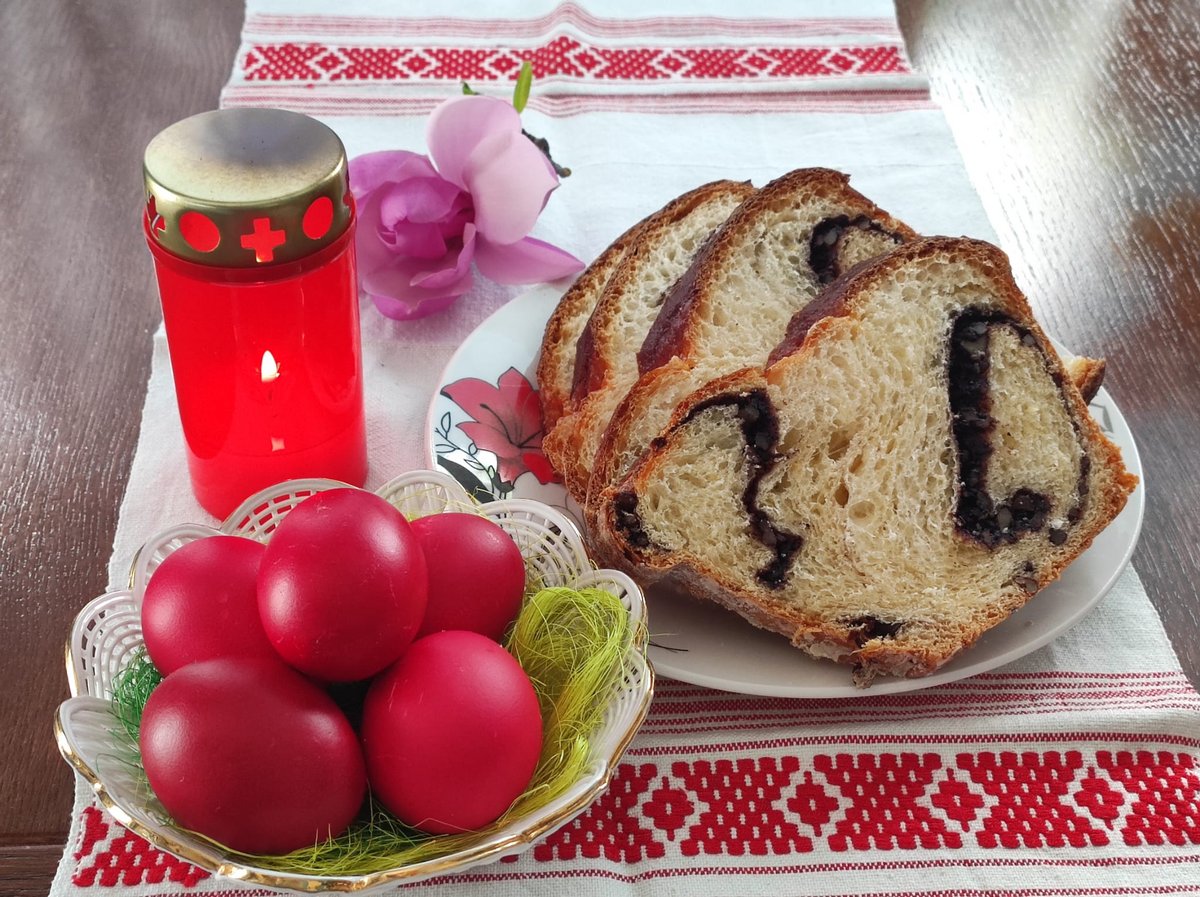
In Bulgaria, Easter (Velikden) is one of the most important and vibrant holidays of the year, deeply rooted in Orthodox Christian traditions. Preparations begin during Holy Week, when families dye eggs - traditionally red to symbolize the blood of Christ - on Thursday or Saturday. A cherished custom is for mothers or grandmothers to gently rub the first red egg on children’s faces, especially on their cheeks, for health, strength, and protection throughout the year. Another popular tradition is the “egg fight,” where people tap the eggs together, and the person with the last unbroken egg is believed to have good luck.
On Saturday night, people attend church services and gather outside at midnight to light candles, symbolizing the resurrection of Christ. Afterward, families return home to break their fast with festive foods such as kozunak (a sweet braided bread), roasted lamb, and fresh spring dishes. Easter in Bulgaria is a time for family gatherings, renewal, and celebration of life and faith.
Iva
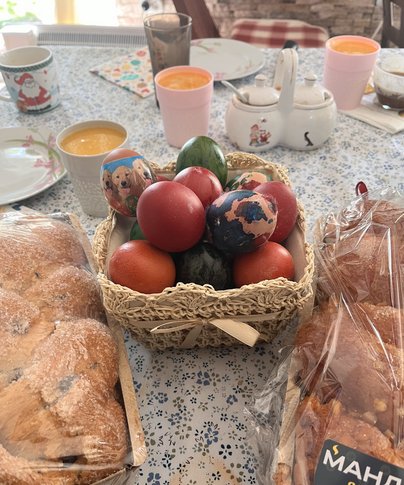
Ever since I was a little kid, Easter has been an important and eagerly anticipated tradition in my family. It all starts on Maundy Thursday, when we boil and paint our eggs. My mom would always paint the first egg red, after which she would draw a little cross on my head while the paint was still wet. “For good health,” she would say. After the first egg was done, I would paint all the other eggs in different colours and decorate them with stickers. Then, on Easter Day, I would wake up only to find a painted egg under my pillow. My dad used to say the Easter Bunny delivered the eggs to my brother and me, but we all kind of knew it was his job!
Another important part of Easter in Bulgaria is “egg tapping” – a traditional Easter game in which two people tap their eggs together to crack the other’s while keeping their own intact. My grandpa had an old wooden egg, which he often used to prank us. After the game, the whole family would gather around the table, eat all the eggs that lost the game, and have some traditional Easter bread roll (kozunak) and roasted lamb.
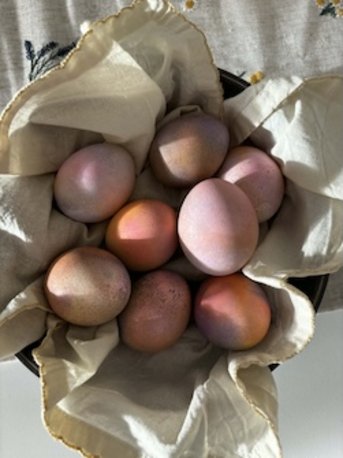
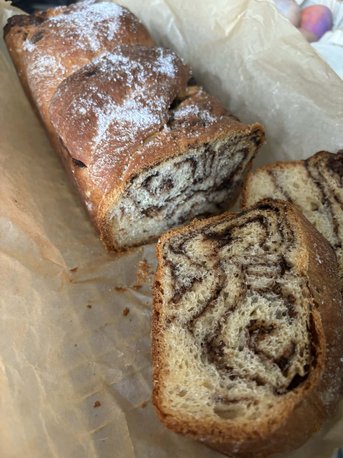
This year, I was not able to celebrate with my family; however, I painted some eggs together with my friends and baked my own bread roll, to which – although not very traditionally – I added some chocolate filling.
ONTARIO, CANADA
Kelsey
In Canada (specifically Ontario), Easter isn’t as much of a widely celebrated holiday as Christmas or Halloween, but it’s still largely celebrated by the church and even some non-religious communities. Many people in Canada celebrate Easter by coming together for a nice dinner, usually with their families. This kind of dinner is rooted in religious traditions, but the food you eat changes depending on where you live. My family usually eats ham, brown-sugar or maple-roasted carrots, green beans, and some kind of potato dish. In the small town where my dad grew up, they also host an annual pancake breakfast to celebrate Easter, where you sit outside and eat pancakes with maple syrup. There’d always be someone in a rabbit costume who walked around and gave chocolate eggs to the young kids. We attend every year!
The Easter Bunny is also a largely celebrated tradition in Canada, especially when you’re young. On the morning of Easter Sunday, children wake up to find bits of chocolate left behind by the Easter Bunny, which they follow to find a larger present, or they partake in an Easter egg hunt left for them by the magical Easter Bunny. I remember running around my backyard with my sister searching for chocolate eggs hidden in the garden, racing to find them all. It’s a really fun tradition, but I have no idea where it came from.

GREECE
Ioanna
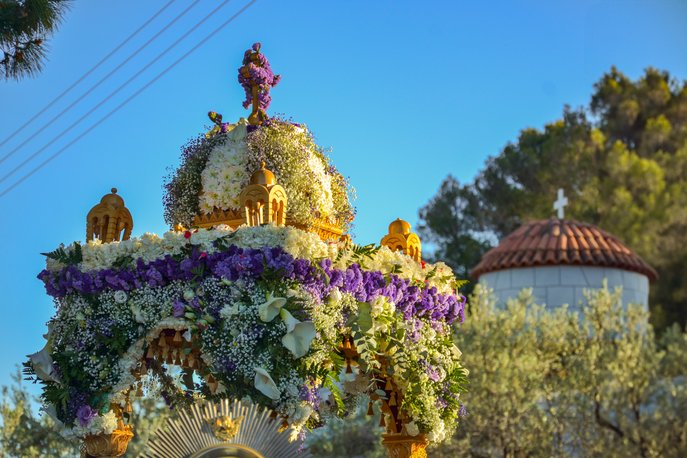
Hej! My name is Ioanna, and I come from Ermionida, Greece. For us, Orthodox Easter, or Pásha (Πάσχα, similar to the Danish word Påske), is one of the most important times of the year, bringing together faith, family, and tradition. In the days before Easter, we dye eggs red and bake tsouréki (τσουρέκι) and Easter cookies, filling our homes with wonderful smells. On Good Friday, the Epitaphios (Επιτάφιος) is carried in procession through the town's streets, while the priest chants and the local community follows behind in a deeply moving atmosphere. When it returns to the church, many people pass underneath it at the entrance as a sign of blessing and devotion.
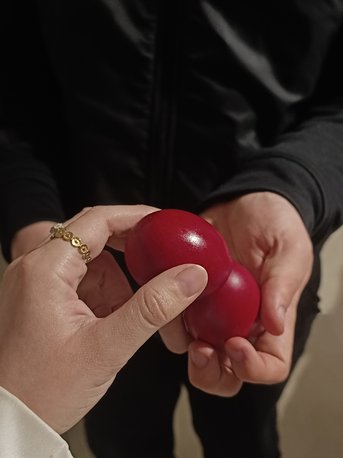
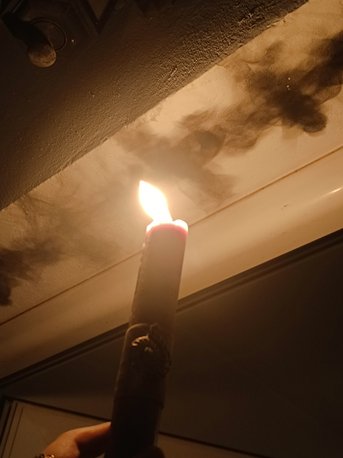
On Holy Saturday night, we all gather at church with our candles to receive the Holy Light, traditionally brought from Jerusalem, and to celebrate the Resurrection. Before entering our homes, we use the Holy Light to make the sign of the cross above the front door, blessing the household. Later, we eat magiritsa (μαγειρίτσα), the traditional Easter soup (indicating the end of Lent), and crack red eggs in a small game.
On Easter Sunday, family and friends come together to roast lamb and kokoretsi (κοκορέτσι), share food, and enjoy the day with music, singing, and dancing. In our area, we also burn Judas as part of the local Easter tradition, which makes the celebration even more unique and memorable.
Markos
Greek Orthodox Easter (or Pascha) is, without doubt, the most important celebration of the year in Greece, and it’s truly an experience like no other. Because the Greek Orthodox Church follows the Julian calendar, Easter in Greece sometimes falls on a different date than in Catholic countries. Preparations begin 48 days before Easter with Kathara Deftera (Clean Monday), the start of a strict fast during which many devout Greeks avoid not only meat but also dairy, eating mainly seafood, vegetables, and olives throughout the period. Holy Week is filled with meaningful rituals: on Holy Thursday, eggs are dyed red to symbolize the blood of Christ, and church interiors are beautifully decorated with flower-covered shrines representing the tomb of Jesus, known as the epitaphios. Holy Friday is a solemn day of mourning — shops close, television broadcasts only religious content, and in the evening a candlelit procession winds through the streets of every town and village.
The most magical moment of the entire year arrives at midnight on Holy Saturday, when the priest emerges from the church carrying the Holy Fire, flown all the way from Jerusalem and distributed across the whole of Greece within just two hours by plane, boat, and car. The crowd lights their candles from it, the bells ring, fireworks explode across the sky, and in many places (particularly in Crete) dynamite is set off to express the sheer joy of the Resurrection. Everyone greets each other with "Christos Anesti!" ("Christ is Risen!"), answered by "Alithos Anesti!" ("Truly He is Risen!").
Easter Sunday is a long, warm, and deeply joyful family occasion, centered around the slow-roasting of a whole lamb over an open fire for up to five hours, followed by a lavish feast with music, Greek dancing, and the beloved tradition of cracking red-dyed eggs together; whoever's egg survives unbroken is said to be blessed with good fortune for the year ahead.
KERALA, INDIA
Sayana
Oshana (Palm Sunday) and the entire Holy Week are observed with deep spirituality, unique rituals, and many food traditions. These traditions are for the Malankara Catholics in Kerala, India; they differ a little across different regions of India.
Oshana marks the beginning of Holy Week. People carry palm leaves (we use tender coconut leaves - we call them "kuruthola") in a procession around the church, singing "Hosanna." A special and beautiful custom in Kerala is for children and families to throw flowers during the procession, symbolizing joy and a welcome to Christ. The blessed palm leaves are later taken home and kept prayerfully.
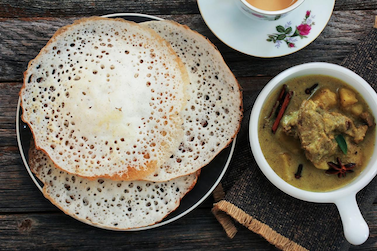
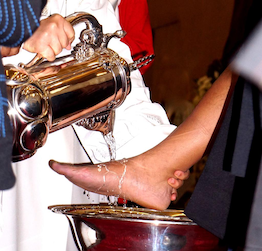
On Maundy Thursday (Pesaha), families prepare Pesaha appam (rice pancake) and Pesaha paal (sweet coconut milk). The head of the family leads prayers and breaks the appam, similar to the Last Supper of Jesus. In churches, there is also the washing of the feet ceremony, which remembers Christ's humility.
Good Friday is the most solemn day. There are long prayers and services (sometimes lasting hours), as well as the reading and singing of the Passion of Christ. Devotees often kneel or prostrate in deep prayer. Food is also extremely simple. We eat Kanji (rice porridge), green pulses, and pickle. Sometimes a bitter drink is taken, symbolizing Jesus's suffering.
Holy Saturday is quiet and reflective until the Easter Vigil at night, when the mood changes to joy. On Easter, churches celebrate the Resurrection with lights, bells, and songs. Fasting ends, so families prepare festive meals (including eggs, meat dishes, appam, stew and many more). Overall, Oshana and Holy Week among Malankara Catholics beautifully combine ancient Syriac Christian traditions, Kerala culture, symbolic rituals like flower-throwing, and meaningful food practices, making it a deeply spiritual and community-centred experience.
SICILY, ITALY
Easter in Sicily: Food, Family, and Food (again) — Davide
Hi everyone! I’m Davide, and I wanted to share a bit of how we celebrate Easter back home in Modica, Sicily.
Easter Sunday is a huge deal for us. There’s this famous tradition called "Madonna Vasa-Vasa" (the Kissing Mary) where the whole town gathers in the square to watch the statues of Mary and Jesus "meet" and hug. It’s loud, crowded, and honestly pretty moving to see.
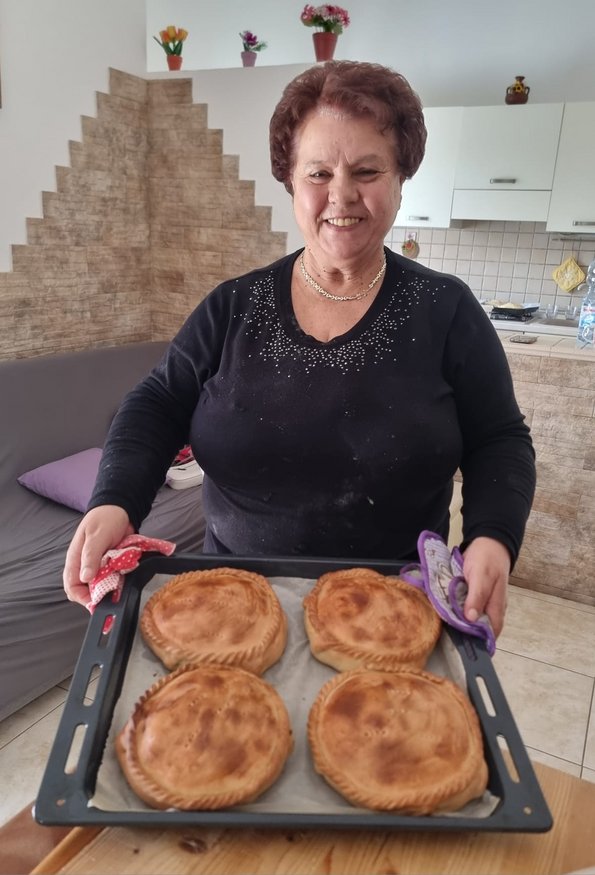
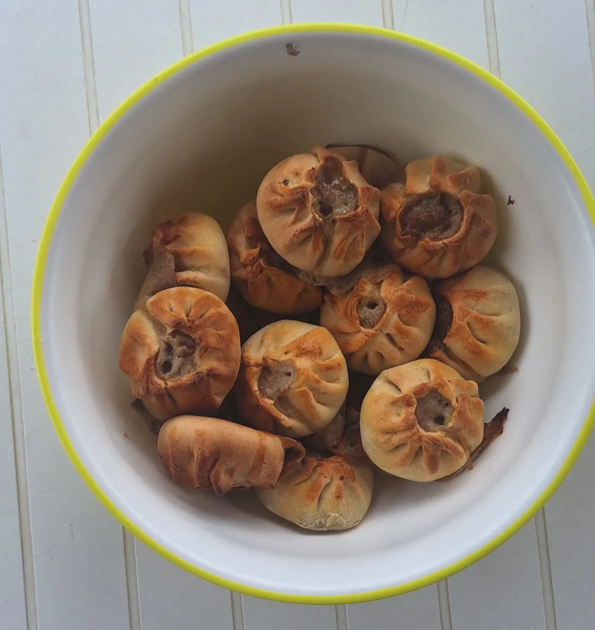
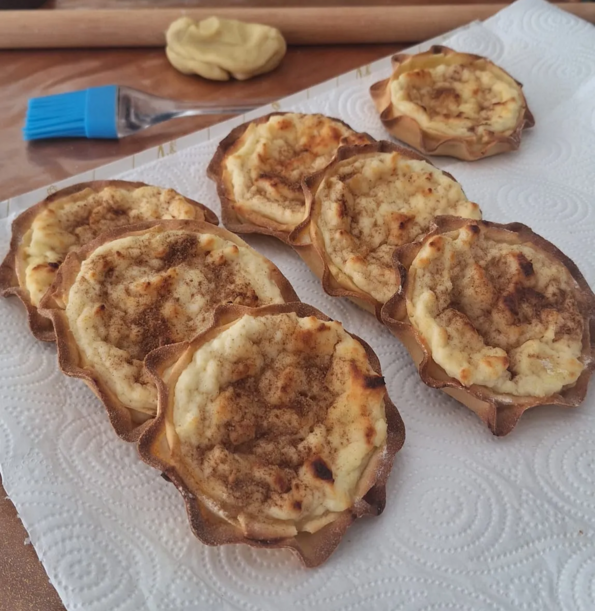
But if you ask any Sicilian, the real celebration happens in the kitchen. We spend the days leading up to Sunday baking enough food to feed an army. I’ve shared some photos of what my family usually makes:
Impanate & Pastieri
These are the big stars.
They’re savory pies filled with lamb or turkey and potatoes. The ones that look like little crowns are called Pastieri.
They're filled with meat, eggs, and cheese.
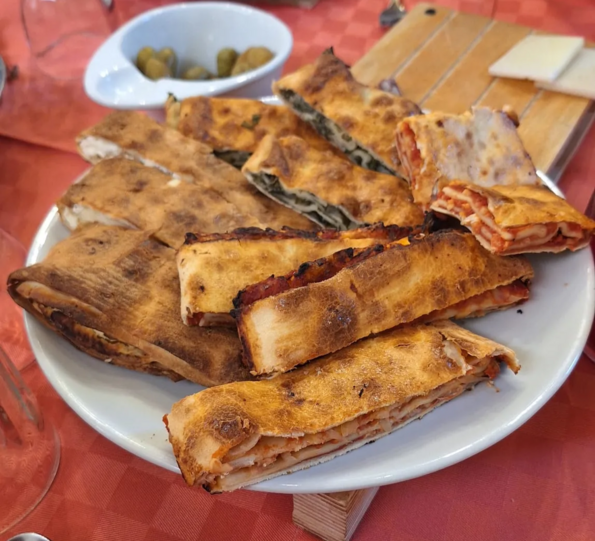
Scacce Modicane
You can see these sliced up on the platter. It’s a thin dough folded with layers of tomato, cheese, or onions according to tradition, but it can also be made with ricotta, broccoli, or chicken.
Every family has their own secret recipe for the filling.
Cassate
We can't finish without dessert. These are sweet tarts filled with fresh ricotta and lots of cinnamon. The taste is very sweet, and personally, it is the thing I miss most.
MOLDOVA
Cristina
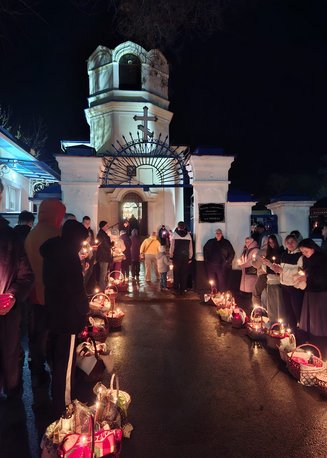
I am from Moldova, where Easter is a very important celebration (probably second only to Christmas). Food is an essential part of it, with traditional dishes such as lamb meat, red-coloured eggs and Pasca - a type of sweet bread that is baked only for Easter. Some of these dishes are carefully arranged in a basket, ready to be taken to church.
This year, I spent Easter at home with my family, which made it especially meaningful since I am away most of the year. On Sunday, starting at midnight, the church service begins. It is marked by the sharing of the Holy Light from Jerusalem, which people take home to their families. The service continues until around 3 o’clock in the morning, and at the end, the priest blesses all the food with holy water that people brought. For 40 days after that, Christians greet each other with “Hristos a Înviat” and “Adevarat a Înviat” - meaning “Christ has Risen” and “Indeed has Risen.”
The next morning is filled with small traditions, like washing one’s face with water, coins, and red eggs for luck and prosperity. Children especially enjoy it, often ending up with rosy cheeks from the dye. The first meal always begins with the blessed food, followed by the classic egg-cracking contest to see which egg is the strongest. It is a very fun part of Easter, but it can quickly turn into a surprisingly serious battle 😆.
Another important day around the Easter period is “Easter of the Dead”, which is celebrated one week after Easter. In preparation, people go to the cemeteries to clean and decorate the graves of their deceased loved ones with flowers and food. On the day, the priest also comes to bless the graves, and people give small gifts to others in memory of the dead. People also share a memorial meal at the gravesite, pouring the last bit of wine from each cup onto the grave to honour their memory. This is again an opportunity to reconnect with others, as many people come to their native villages on this day after moving to the city.
In the end, Easter in Moldova is about family, about returning home, and remembering one’s roots - a celebration that truly brings people together.
POLAND
Markos
Easter is one of the most cherished and anticipated holidays in Poland, blending deep Catholic traditions with traces of much older folk customs. The celebrations begin a week before Easter on Palm Sunday, when people bring handmade "palmy" to church — colourful bouquets made from dried flowers, willow branches, and bright ribbons, since actual palm trees are rarely found in Poland. The following Holy Week is a time of spiritual reflection, with many Polish families observing Lenten fasting by giving up meat and dairy.
Holy Saturday is perhaps the busiest day of preparations: families gather to decorate hard-boiled eggs called ''pisanki,’’ using techniques ranging from simple onion-skin dyeing to elaborate wax patterns, a tradition believed to stretch back over 5,000 years to pre-Christian times. On the same day, a beautifully decorated święconka basket (lined with white linen and adorned with boxwood sprigs) is prepared and taken to church for blessing. It typically contains eggs, sausage, bread, horseradish, salt, a slice of cake, and a small sugar lamb, each item carrying its own symbolic meaning.
Easter Sunday begins with an early morning Mass, followed by the whole family gathering for a grand festive breakfast. After weeks of fasting, the table is loaded with cold meats, pâté, roasted meats, żurek soup, and eggs — an indulgent feast. Before eating, the family shares a piece of the blessed egg and exchanges warm wishes, much like sharing the Christmas wafer. The celebrations then wrap up on Easter Monday with Śmigus-Dyngus, also known as Wet Monday, a joyful, chaotic tradition in which people drench each other with water, symbolizing purification and the arrival of spring.
SOUTHERN SPAIN
Pablo
Hello! I felt I could contribute, since, to my understanding, Easter (or the Holy Week, as we call it) is very much celebrated in Southern Spain compared to some other countries, due to Catholicism. I will focus on the traditions in the city I am from, but most of the traditions I will explain are found throughout most of southern Spain.
Regarding food, most of them are meat-free since it is considered a sin to eat meat during these times. The most famous is "torrija," a dessert made from leftover bread from the day before, soaked in milk with sugar and cinnamon, then fried in olive oil. The "potaje de vigilia" is also very famous. It translates as "stew of the day before", which is prepared with chickpeas, cod, spinach and paprika. Delicious!
But I cannot avoid talking about the "Pasos", which are images (statues or figures) representing Jesus, Holy Mary, saints, or other religious characters, kept throughout the year in churches but "taken out for a walk" by the "costaleros" during this time. These are people who lift the figures (which can easily weigh as much as a car) only by human power. Surrounding them are usually "nazarenos", which are penitents who walk in the processions, and their entire identity is built around the concept of anonymous devotion, which is why they cover their faces. Their costumes resemble outfits worn by members of the KKK, and outsiders usually mistake them as such, but they have nothing to do with them.
ROMANIA
Iulia
In Romania, Easter is considered a great holiday, not only for its solemn religious significance, but also because it is an occasion to gather with friends and family, and enjoy a (mostly) peaceful meal together. Romania is an Orthodox country, meaning we usually celebrate a week after the Catholic Easter.
The holiday starts with a 7-week fast, and let me tell you, grandmas are very strict with this one. In the week before Easter (the Holy Week), everyone begins an intense spring cleaning in and around the house because, when Christ rises, He cannot catch you with a messy house. Moms and grandmas are very strict with this one as well. Many people also start cooking food for the Easter lunch this week because most of our foods take a lot of time and effort (more on that later).
In the night between Saturday and Easter Sunday, people dress in their best clothes, preferably something new, and go to the church at midnight to get the Holy Fire from the priest, symbolizing Christ’s victory over death. After this, there is a short liturgy, which ends with the priest telling the people “Hristos a înviat” (translated as “Christ has risen”) three times, to which people reply “Adevărat a înviat” (“Indeed He has risen”). Usually, people greet each other in this way for a few days after Easter. Traditionally, people would do it until the Ascension of Christ, 40 days later.
On Sunday, we have the long-awaited Easter lunch with our family. When we talk about Romanian Easter food, the most popular choice is lamb, prepared in all kinds of ways. We serve it as an appetizer as “drob de miel”, made of lamb organs, green onions, herbs and hard-boiled eggs. For the first course, we have lamb soup (ciorbă) or borscht, and for the second course, we have lamb roast, usually served with potatoes. Throughout the meal, you always have to remember to leave space for, in my opinion, the best dish: sarmale – minced meat wrapped in big sauerkraut or grape vine leaves. The most popular desserts are cozonac (sweet bread with cocoa, walnuts, raisins, and/or Turkish delight) and pască (cheese pie with or without raisins).
The most popular tradition is dyeing hard-boiled eggs in different colours, but mostly red. The red dye is said to represent the blood Christ has spilt in his sacrifice. Easter lunch starts with an egg-cracking battle royale game, the most important event! You watch your grandpa pick up a strong-looking red hard-boiled egg from the basket. You choose a yellow egg as your defence. He raises his egg above yours and says “Hristos a înviat”, and you reply “Adevărat a înviat”. Grandpa brings his egg down and crushes yours completely. He continues to challenge the remaining contenders to the egg battle champion title, currently held by your aunt. In the end, everyone wins because we all get to eat delicious hard-boiled eggs, in case another source of protein was needed in this meal. Romania is a big country, so there are many other traditions in different regions, but these are the traditions my family generally follows, and they will always feel right to me.