
5 Commonly Used Danish Phrases to Know to Sound like a Local
Before you move to Denmark, here are some of the most commonly used words and phrases to know including 'vi ses,' 'tak for i dag,' 'nå,' and more! You’ll sound just like a local when you use them (that is, if you can figure out how to pronounce them right).

1. 'Vi ses!'
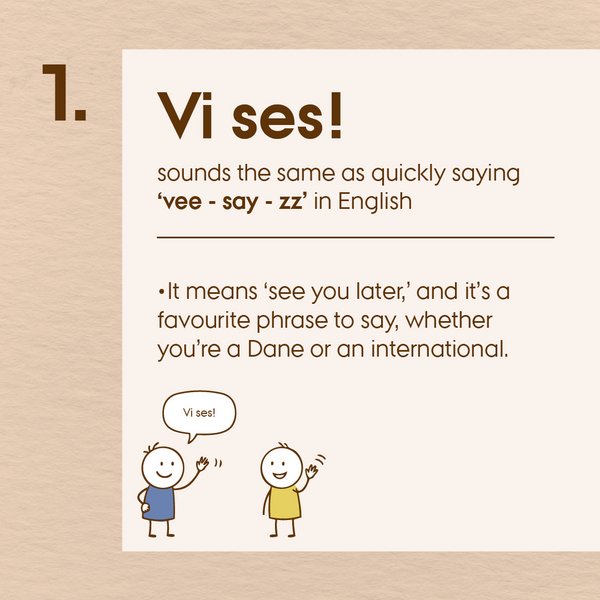
You’ll probably hear this a lot around Aarhus. It means ‘see you later,’ and it’s a favourite phrase to say, whether you’re a Dane or an international. It sounds the same as quickly saying ‘vee - say - zz’ in English.
For example, when you’re waving goodbye to your friends, you’ll sound like a true Dane if you shout out “vi ses!” (especially if you know that you’ll see them again soon).
2. 'Tak for i dag'
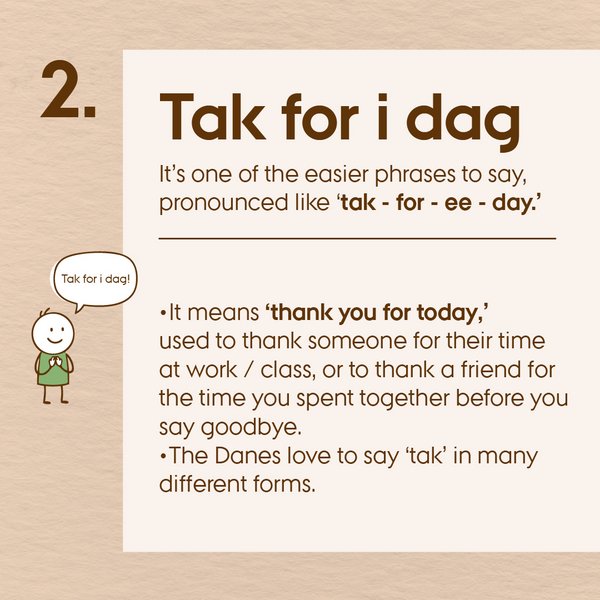
Another commonly used phrase is ‘tak for i dag.’ The Danes love to say ‘tak’ in many different forms, and this is one of the most commonly used phrases to thank someone for their time. It specifically means ‘thank you for today,’ which you can say to someone to thank them for their time at work / class, or to thank a friend for the time you spent together before you say goodbye. If you work somewhere where you have a lot of Danish coworkers, you'll probably hear this all the time!
It’s one of the easier phrases to say in Danish, pronounced like ‘tak - for - ee - day.’
For example, if you have a professor whose class you really like and you want to thank them for their time, you can say ‘tak for i dag!’ after the lecture as you leave.
3. 'Nå'
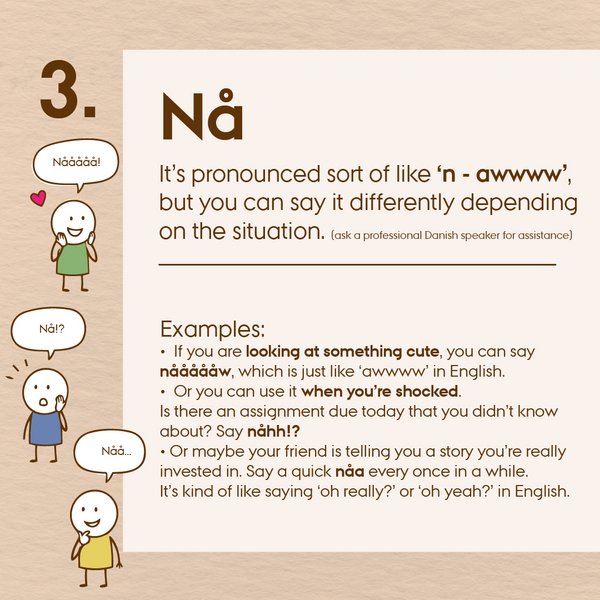
This is perhaps the most fun and versatile Danish word to know! It’s a tiny word that means a whole lot of different things, and there isn’t really an English equivalent for it. It’s pronounced sort of like ‘n - awwww’, but you can say it differently depending on what you want it to mean (ask a professional Danish speaker for assistance).
For example, if you are looking at something cute, you can say nåååååw, which is just like ‘awwww’ in English.
Or you can use it when you’re shocked. Is there an assignment due today that you didn’t know about? Say nåhh!?
Or maybe your friend is telling you a story you’re really invested in. Say a quick nåa every once in a while. It’s kind of like saying ‘oh really?’ or ‘oh yeah?’ in English.
4. 'I lige måde'
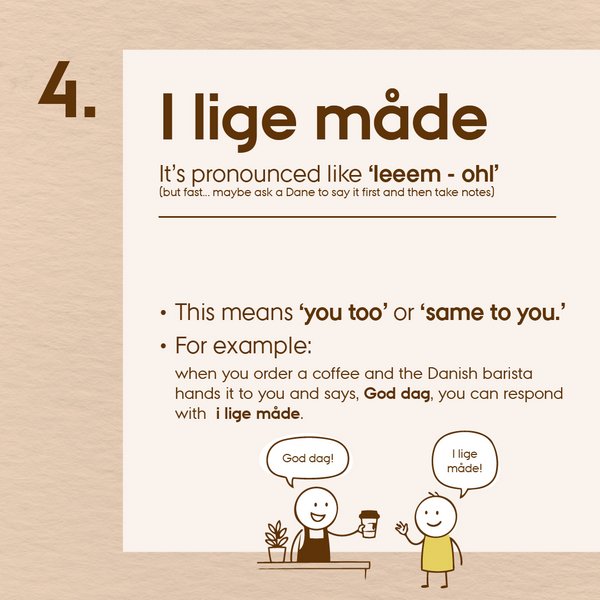
This means ‘you too’ or ‘same to you,’ and it’s the perfect response for when someone wishes you a good day, and you want to impress them with your amazing Danish skills.
However, this is NOT a word for the faint of heart. While it looks harmless enough, it’s probably the most difficult phrase to pronounce on this list. It’s pronounced like ‘ee- leeem - ohl’ (but fast… maybe ask a Dane to say it first and then take notes).
For example, when you order a coffee and the Danish barista hands it to you and says, God dag, you can respond with i lige måde.
Finally, the last phrase on this list that you’ll probably hear used a lot by the Danes around Aarhus is…
5. 'Ellers tak'
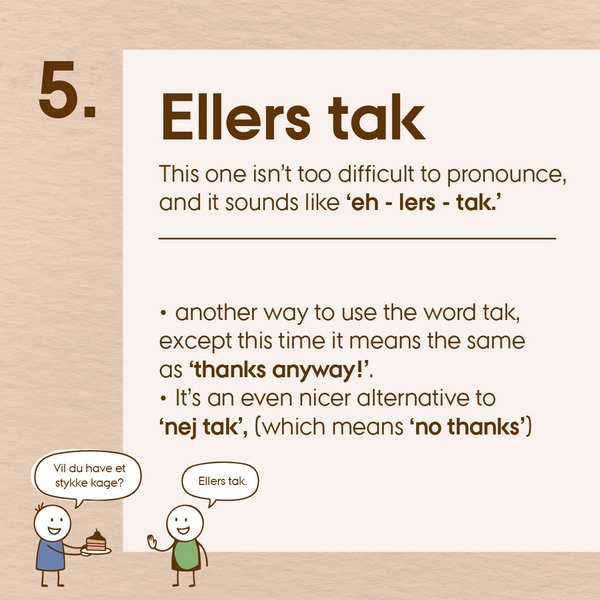
This is another way to use the word tak, except this time it means the same as ‘thanks anyway!’ It’s an even nicer alternative to ‘nej tak’ (which means ‘no thanks’).
This one isn’t too difficult to pronounce, and it sounds like ‘eh - lers - tak.’
For example, when you’re visiting the Aros rainbow panorama for the seventh time since you’ve moved to Aarhus, and a very nice Dane asks if you want your picture taken, you can say ‘nej, ellers tak!’
And now you know the meanings of some of the most commonly used phrases you’ll hear around Aarhus.
We know that the Danish language can be a bit daunting to speak at first and takes some time to learn. Luckily, nearly everyone you encounter in Aarhus will speak English, so you’ll have no trouble navigating life in the city while you try to become fluent.
We definitely recommend that you learn Danish if you plan to stay in Denmark for a long period of time, because it’s a great tool to help you make Danish friends, and often a requirement for many full-time jobs in the city. There are many language schools and opportunities to practice in the city for you to try!
Now, I will leave you with my best piece of advice for anyone trying to master their Danish pronunciation. This bit of wisdom comes from my Module 1 teacher from the A2B language school, who is a Dane himself:
‘Whenever you try to pronounce something in Danish, and you can’t quite get it right, just pretend you have a potato in your mouth. That usually works.’
Tak for i dag og vi ses!